
Abstract
Cavernous sinus metastasis from follicular thyroid carcinoma (FTC) is exceedingly rare and typically indicates advanced, radioiodine-refractory disease. We report a 37-year-old man with minimally invasive FTC who was treated with total thyroidectomy, neck dissection, and cumulative radioiodine therapy totaling 720 mCi for persistent iodine-avid disease. Four years later, he developed progressive left-sided palsies of cranial nerves III, IV, and VI. Imaging revealed a cavernous sinus mass with orbital apex extension and perineural spread. Serum thyroglobulin was markedly elevated (>500 ng/mL), whereas diagnostic radioiodine scintigraphy demonstrated no uptake, a finding consistent with dedifferentiated disease. Biopsy confirmed metastatic FTC. The patient received external beam radiotherapy and systemic therapy with lenvatinib; however, the disease progressed, and he died 16 months after the diagnosis of cavernous sinus metastasis. This case highlights the aggressive potential of FTC, the limitations of radioiodine imaging in dedifferentiated disease, and the poor prognosis associated with skull-base metastases despite multimodal therapy.
Keywords: Follicular thyroid cancer, cavernous sinus metastasis, iodine-131 whole-body scintigraphy, 18F-FDG PET/CT
, ,
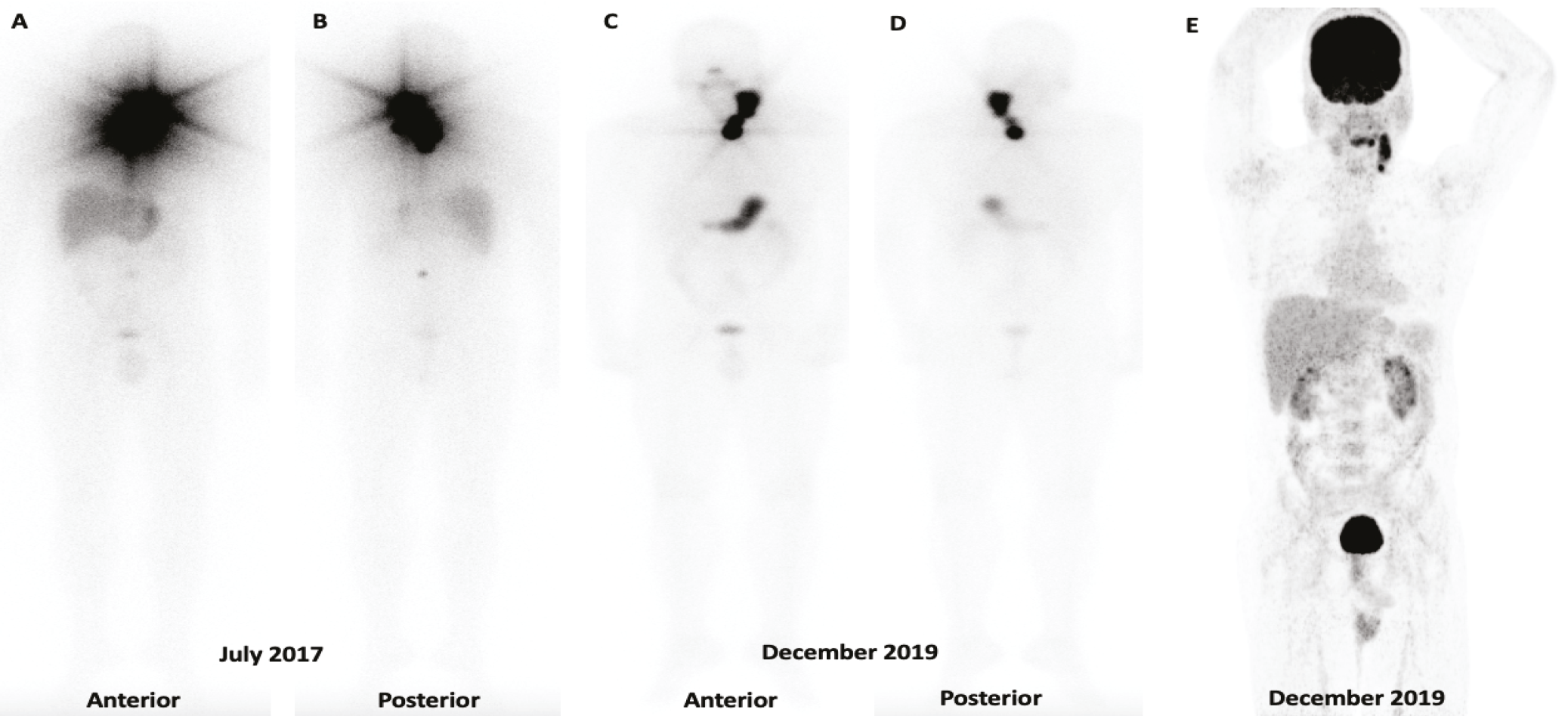
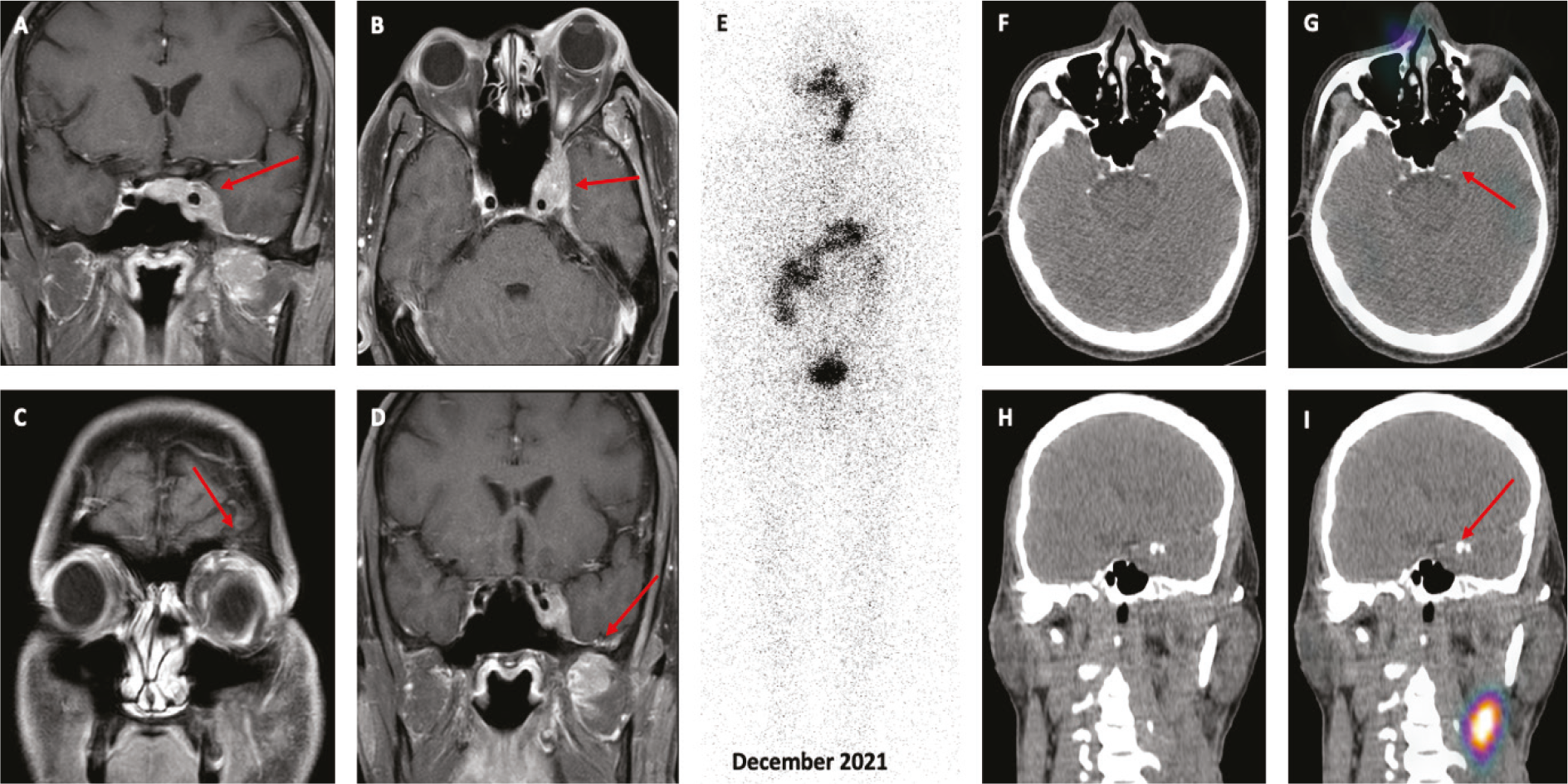
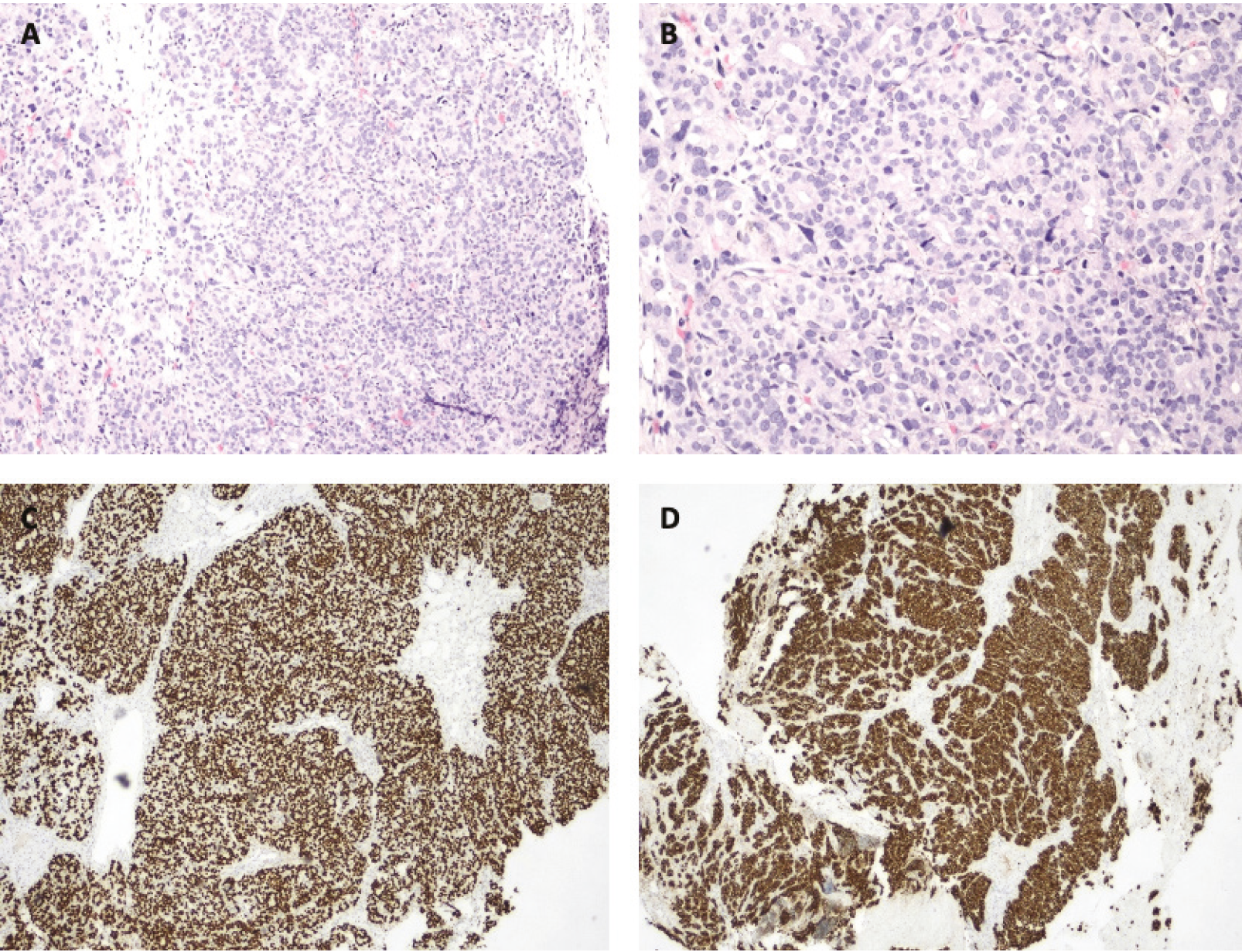
FTC characteristically spreads via hematogenous dissemination, most commonly to the lungs and bones, whereas intracranial metastases are rare (,). Cavernous sinus involvement represents an uncommon manifestation of advanced disease and often presents with cranial neuropathies due to its proximity to critical neurovascular structures (). Tumor spread may occur via the valveless vertebral venous plexus or, less commonly, lymphatic pathways (). In this case, perineural spread represents an additional route of extension and is associated with aggressive tumor biology and poorer outcomes ().
Loss of radioactive iodine (RAI) avidity reflects tumor dedifferentiation with reduced sodium-iodide symporter expression, signifying transition to radioiodine-refractory differentiated thyroid carcinoma (RAIR-DTC), which carries a poorer prognosis and limited therapeutic options (,). Further RAI therapy is ineffective, and management shifts toward alternative strategies. Given the inoperable skull-base location, external beam radiotherapy was administered for local control, in line with recommendations from the American Head and Neck Society (). Systemic therapy with lenvatinib was initiated but required modification due to tolerability issues. Despite multimodal treatment, the disease progressed, and the patient died 16 months after diagnosis of cavernous sinus metastasis, reflecting the poor prognosis associated with intracranial involvement in RAIR-DTC (,).
This case highlights a delayed aggressive transformation in FTC, emphasizes the recognition of atypical metastatic patterns such as cavernous sinus involvement and perineural spread, and underscores the limitations of radioiodine imaging in dedifferentiated disease.
Footnotes
Ethics
Informed Consent: The patient provided written informed consent.
Authorship Contributions
Surgical and Medical Practices: H.L., M.F.M.R., S.Z.A.H., Concept: H.L., M.F.M.R., Design: H.L., M.F.M.R., Data Collection or Processing: H.L., M.F.M.R., R.G., Analysis or Interpretation: H.L., M.F.M.R., J.J., R.G., S.Z.A.H., Literature Search: H.L., M.F.M.R., J.J., R.G., S.Z.A.H., Writing: H.L., M.F.M.R., J.J., R.G., S.Z.A.H.
Conflict of Interest: No conflicts of interest were declared by the authors.
Financial Disclosure: The authors declare that this study has received no financial support.
References
Chandarana MN, Epari S, Chaukar D, Moiyadi AV. Metachronous solitary metastasis of papillary thyroid cancer in the cavernous sinus: case report and review of literature. Journal of Cancer Research and Therapeutics. 2012;8:436-438.
Singh N, Marak J, Singh DK, Verma S. Follicular carcinoma of the thyroid presenting as metastasis in the wall of an arachnoid cyst. BMJ Case Rep. 2023;16:e255865.
Takami T, Ohata K, Tsuyuguchi N, Mao Y, Inoue Y, Wakasa K, Hara M. Cavernous sinus metastasis from thyroid papillary adenocarcinoma. J Clin Neurosci. 2002;9:598-600.
Medvedev O, Hedesiu M, Ciurea A, Lenghel M, Rotar H, Dinu C, Roman R, Termure D, Csutak C. Perineural spread in head and neck malignancies: imaging findings - an updated literature review. Bosn J Basic Med Sci. 2022;22:22-38.
Tong LI, Abdullah B Bin, Singh AS, Chooi LL, Rahim SA, Ramasamy V. A rare metastatic follicular thyroid carcinoma masquerading as primary sinonasal carcinoma presentation with unusual orbit, skull base and brain metastases. Egyptian Journal of Ear, Nose, Throat and Allied Sciences. 2021;22:1-5.
Lee TS, See A, Lim C, Huang XY. Successful treatment of cavernous sinus metastasis from follicular thyroid carcinoma with lenvatinib. Korean Thyroid Association. 2020;13:60-63.
Kiess AP, Agrawal N, Brierley JD, Duvvuri U, Ferris RL, Genden E, Wong RJ, Tuttle RM, Lee NY, Randolph GW. External-beam radiotherapy for differentiated thyroid cancer locoregional control: a statement of the American Head and Neck Society. Head Neck. 2016;38:493-498.