
Abstract
Although extrapulmonary Coccidioides infection is rare, it has been shown to disseminate to the skin and musculoskeletal system, with a strong affinity for bone. We present a case of disseminated Coccidioides infection with bone scintigraphy indicating diffuse fungemia despite equivocal serum assay, leading to appropriate antifungal therapy and a full recovery.
Keywords: Mycoses, scintigraphy, Coccidioides
, ,
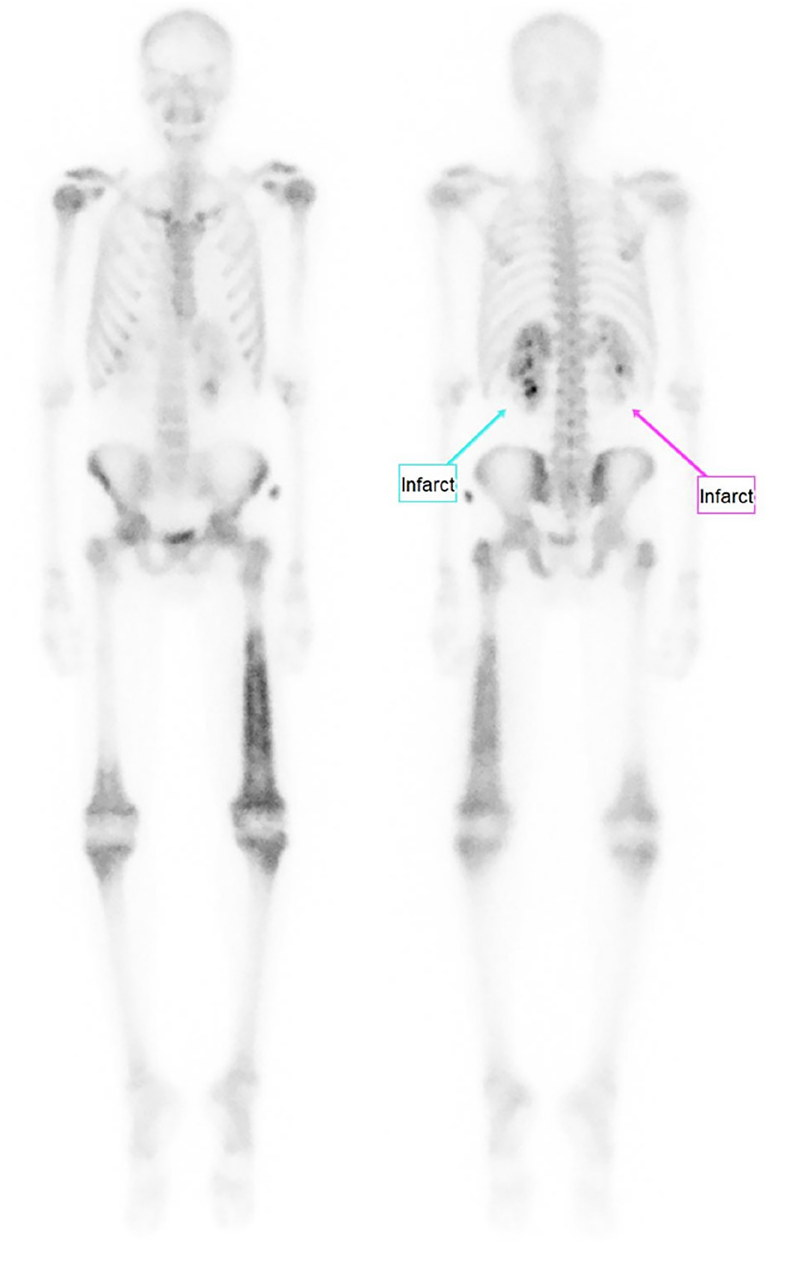
Infectious disease ordered additional lab work, which revealed positive Coccidioides immunoglobulin G; however, repeat confirmatory testing was negative. Given negative confirmatory tests, a bone scan was ordered for further evaluation; as Coccidioides has high affinity for bone (,,).
Technetium-99m (Tc-99m) methylene diphosphonate (MDP) bone scan showed abnormal radiotracer activity seen in the left femur, bilateral knee joints, distal femurs, proximal tibias, bilateral humeral heads, and bilateral femoral heads. This is concerning for osseous coccidiomycosis with known proclivity for osteoarticular joints (,). While osteoarticular Tc-99m MDP uptake is symmetric in the appendicular skeleton, left femoral uptake is very prominent along the left femoral shaft. Bone scintigraphy also showed areas of decreased uptake in bilateral renal cortices, suggestive of infarcts related to septic emboli. Overall, the patient was diagnosed with presumed osseous Coccidioidomycosis after a bone scan. The patient’s condition improved after antifungal therapy, leading to a full recovery at the time of discharge.
Although bone scintigraphy is not commonly used to detect fungemia, it can serve as an adjunct imaging modality in cases of equivocal serum assay, as certain species (i.e., Coccidioides) can cause osteoarticular Tc-99m MDP uptake (). This case depicts the role of bone scintigraphy in disseminated fungemia, especially for the Coccidioides species, and can aid in diagnosis when there is an equivocal serum antibody assay.
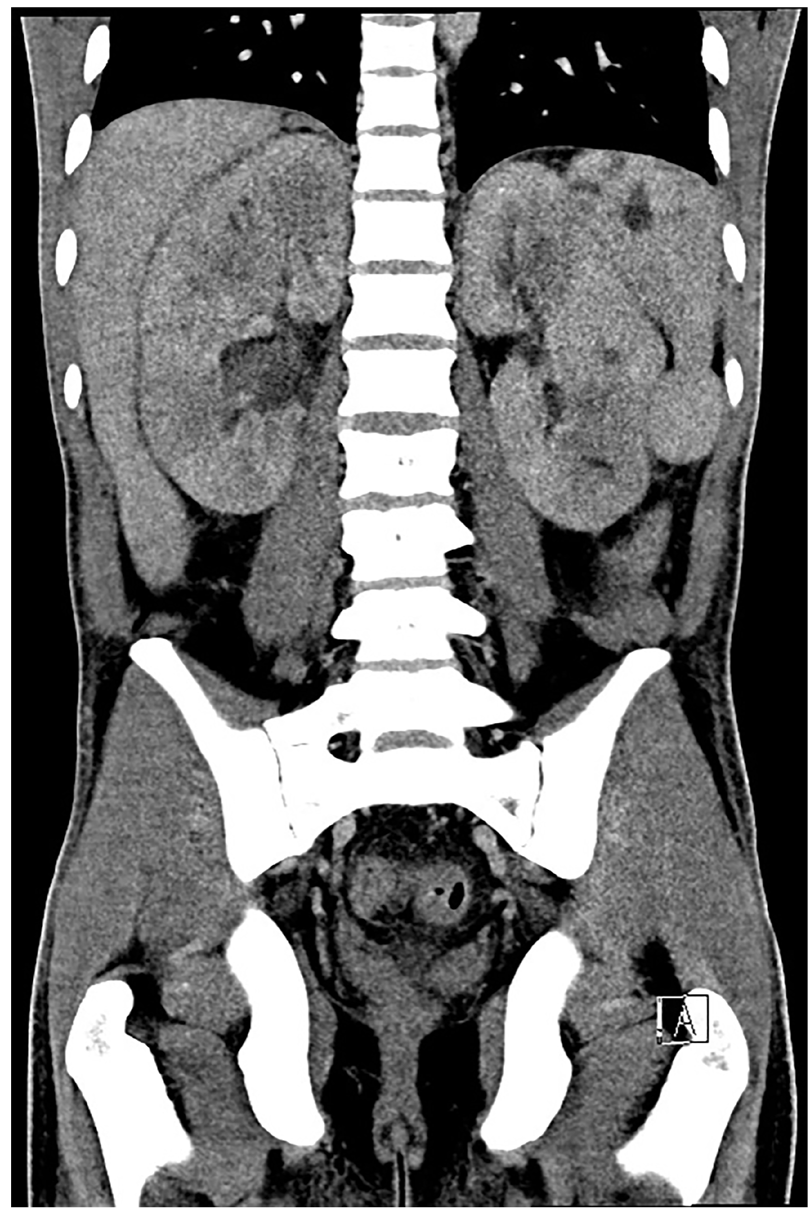
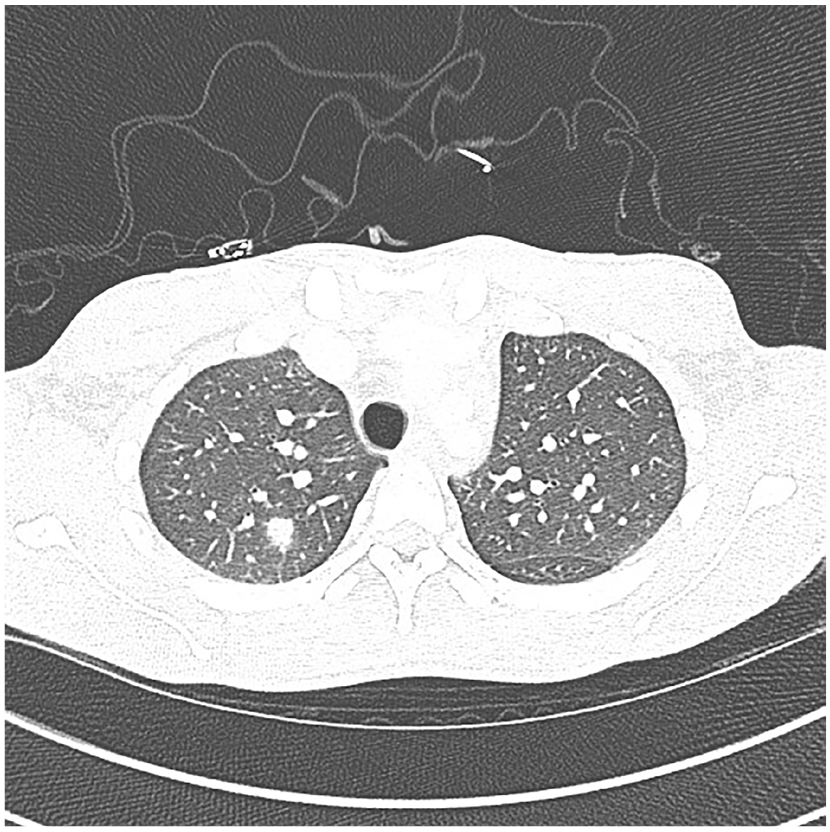
Given bone scintigraphy and CT scan findings of diffuse fungal infection, the patient was started on itraconazole, which was later switched to fluconazole due to cost.
Footnotes
Ethics
Informed Consent: Our institutional IRB protocol doesn’t require documentation of consent for case studies which don’t involve protected health data/patient identifiers.
Authorship Contributions
Concept: T.B.C., Design: T.B.C., C.W., Data Collection or Processing: T.B.C., C.W., Analysis or Interpretation: T.B.C., C.W., Literature Search: T.B.C., C.W., Writing: T.B.C., C.W.
Conflict of Interest: No conflicts of interest were declared by the authors.
Financial Disclosure: The authors declare that this study has received no financial support
References
Tsantes AG, Koutserimpas C, Naoum S, Drosopoulou LP, Papadogeorgou E, Petrakis V, Alpantaki K, Samonis G, Veizi E, Papadopoulos DV. Diagnosis, treatment, and outcome of coccidioidal osseous infections: a systematic review. J Fungi (Basel). 2024;10:270.
Belthur MV, Blair JE, Shrader MW, Malone JB. Musculoskeletal coccidioidomycosis. Current Orthopaedic Practice. 2018;29:400-406.
Deresinski SC. Coccidioidomycosis of bone and joints. Springer eBooks. Published online 1980:195-211.
Li YC, Calvert G, Hanrahan CJ, Jones KB, Randall RL. Coccidiomycosis infection of the patella mimicking a neoplasm - two case reports. BMC Med Imaging. 2014;14:8.
Moni BM, Wise BL, Loots GG, Weilhammer DR. Coccidioidomycosis osteoarticular dissemination. J Fungi (Basel). 2023;9:1002.