
Abstract
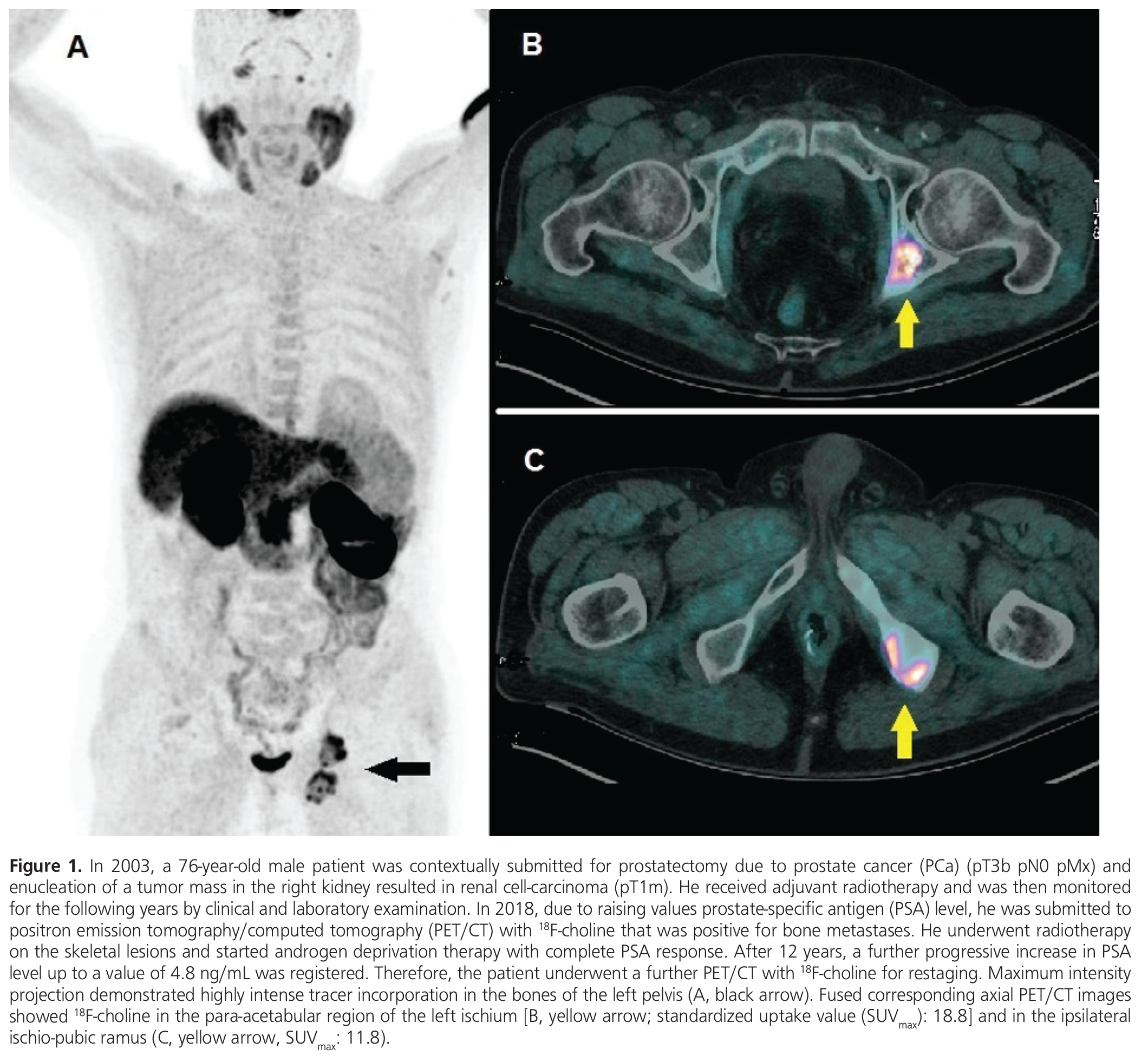
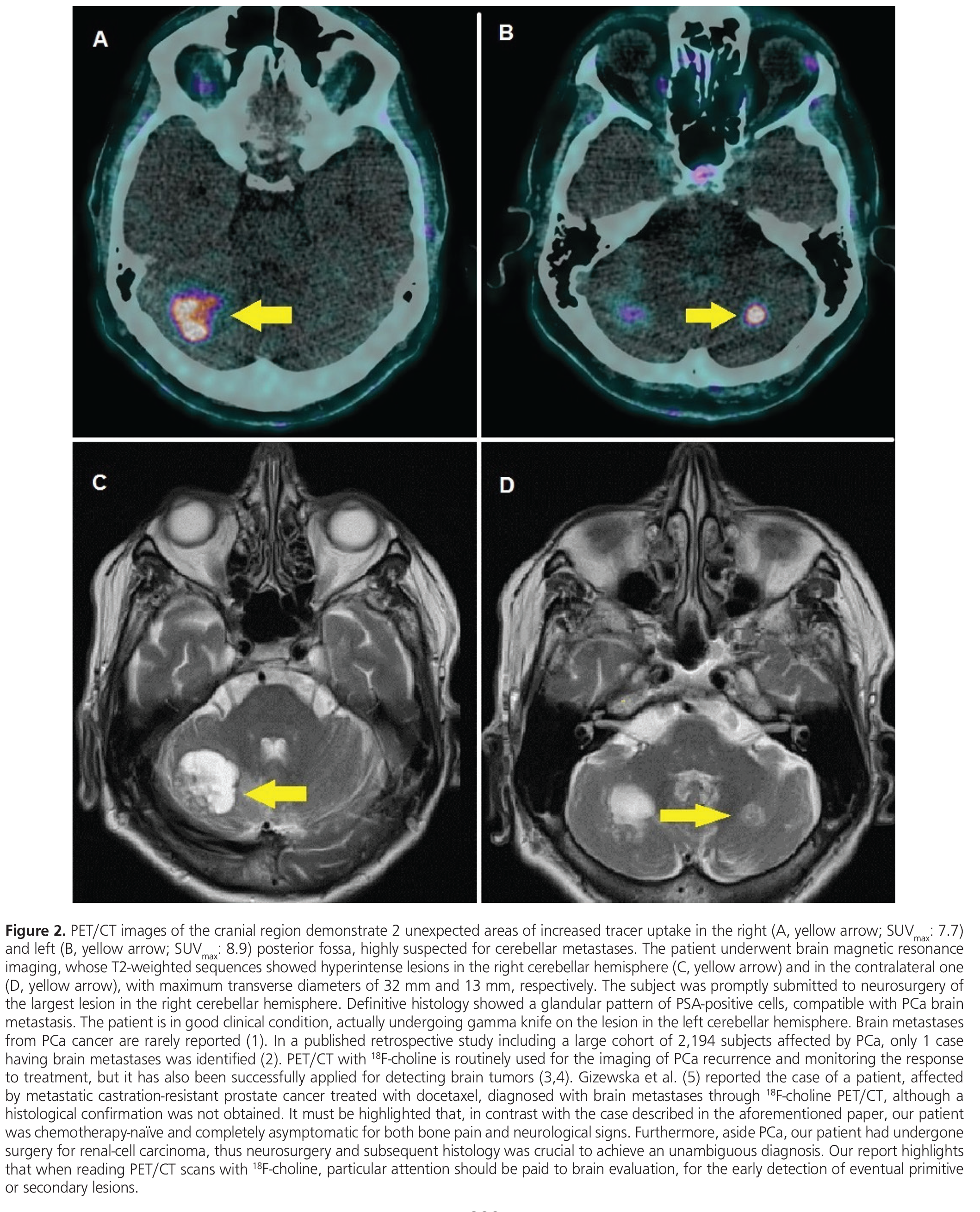
A 76-year-old male, previously submitted enucleation renal-cell carcinoma (pT1) and prostatectomy for prostate cancer (Gleason score 3+5, pT3b pN0 pMx), was submitted to positron emission/computed tomography (PET/CT) with 18F-choline for restaging due to raised levels of prostate-specific antigen. PET/CT scan showed increased tracer incorporation corresponding to bone metastases in the left ischio-pubic ramus, also revealing 2 areas of increased tracer uptake in the cerebellum, subsequently confirmed by brain magnetic resonance imaging. The patient was urgently submitted to neurosurgery. Post-operative histology was positive for brain metastases from prostate cancer.
Keywords: Prostate neoplasm, positron emission tomography, molecular imaging, neurosurgery, personalized medicine
References
Estebanez J, Teyrouz A, Gutierrez MA, Linazasoro I, Belloso J, Cano C, Peralta JM, Sanz JP. Natural history of prostate cancer. Arch Esp Urol 2014;67:383-387.
Macedo J, Carneiro E, Ferreira D, Verdelho A, Afonso LP, Maurício J, Silva SM, Arantes M. Neuroimaging analysis of rare brain metastases from prostate cancer: PS171. Porto Biomed J 2017;2:220.
Filippi L, Basile P, Schillaci O, Bagni O. The Relationship between total lesion activity on 18F choline positron emission tomography-computed tomography and clinical outcome in patients with castration-resistant prostate cancer bone metastases treated with 223Radium. Cancer Biother Radiopharm 2020;35:398-403.
Treglia G, Muoio B, Trevisi G, Mattoli MV, Albano D, Bertagna F, Giovanella L. Diagnostic performance and prognostic value of PET/CT with different tracers for brain tumors: a systematic review of published meta-analyses. Int J Mol Sci 2019;20:4669.
Gizewska A, Witkowska-Patena E, Stembrowicz-Nowakowska Z, Buraczewska A, Dziuk M. Brain metastases in patient with prostate cancer found in 18F-choline PET/CT. Nucl Med Rev Cent East Eur 2015;18:39-41.