
Abstract
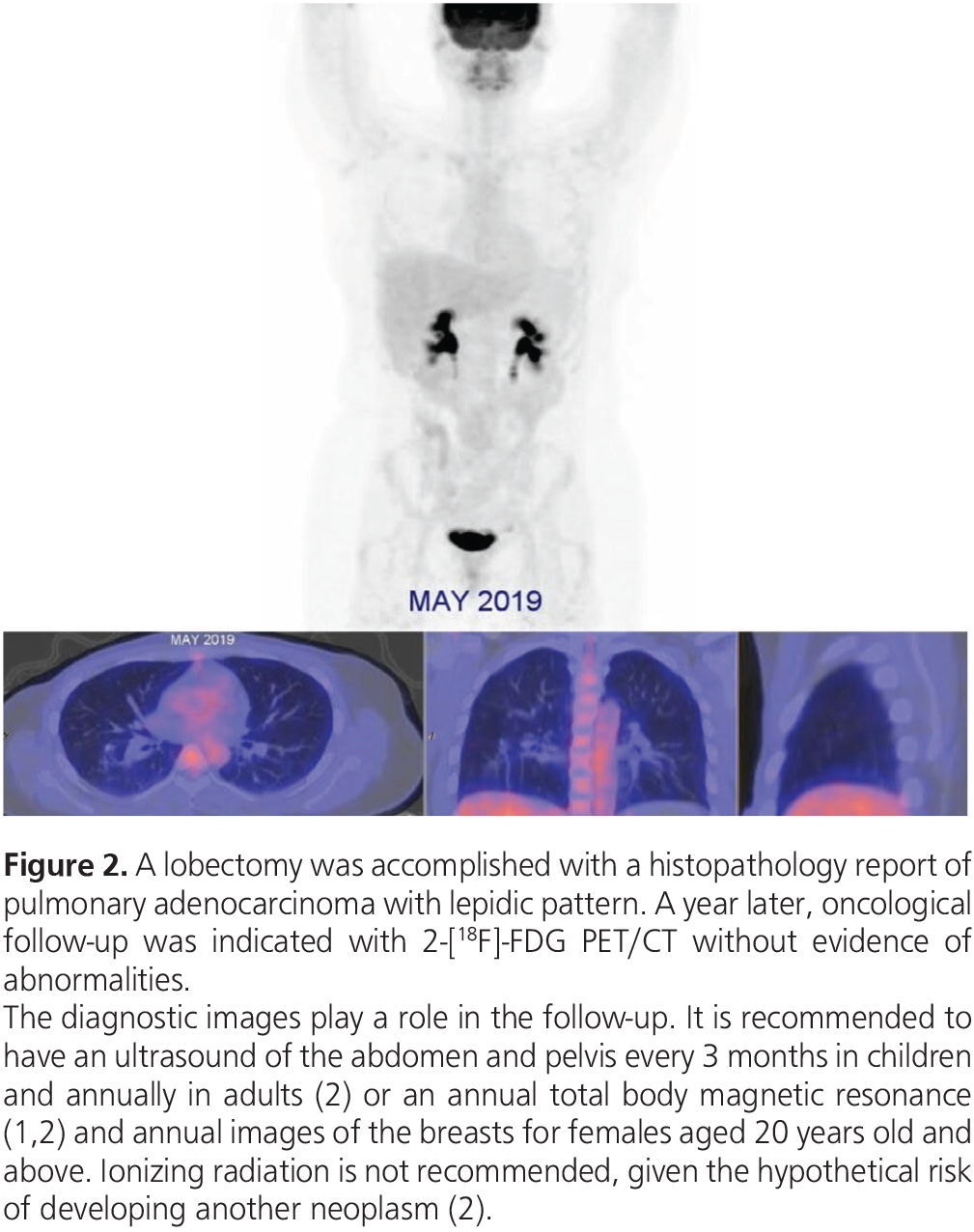
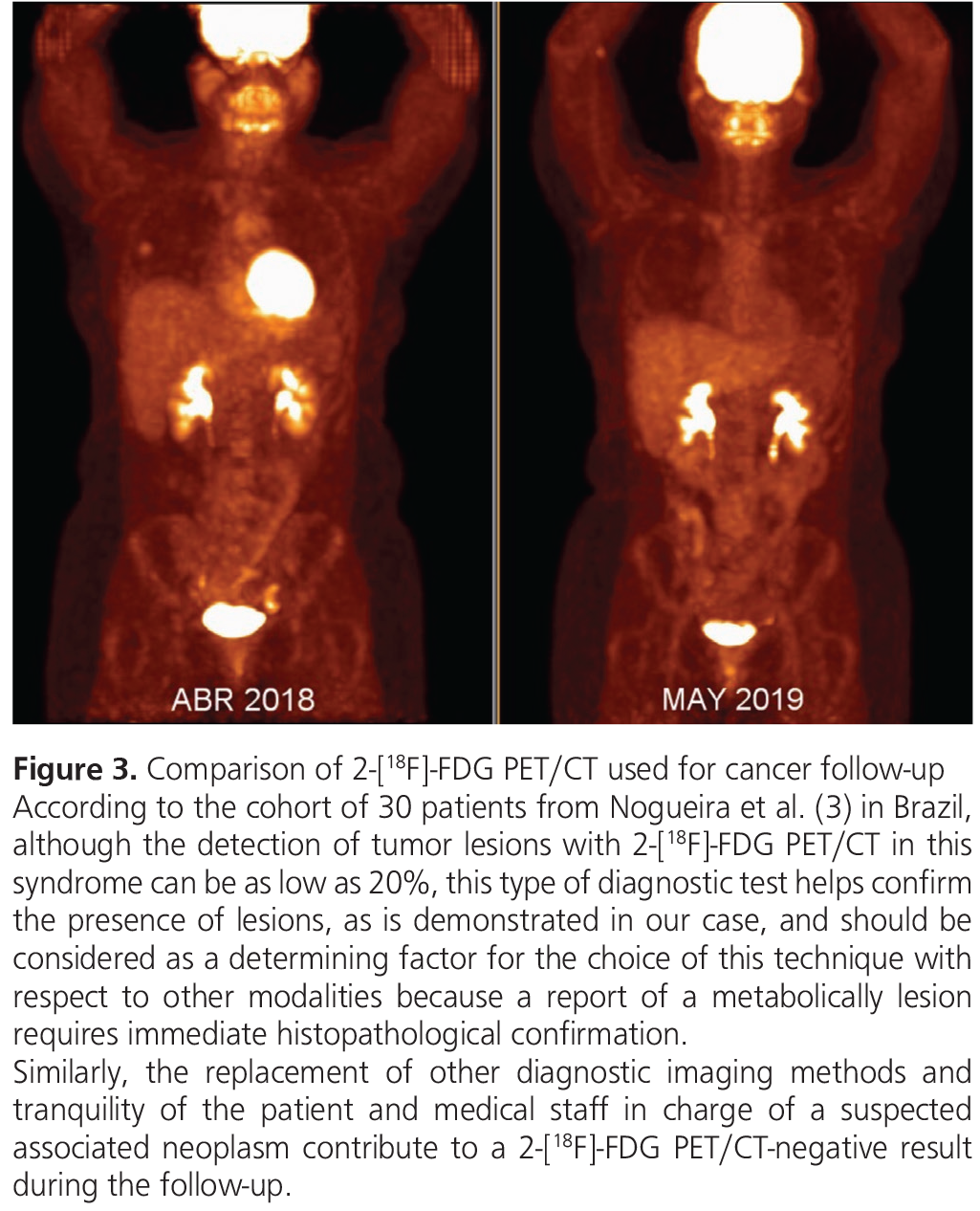
Li-Fraumeni syndrome is a rare disorder caused by abnormalities of the tumor-suppressor protein P53 gene. We present the case of a 26-years-old female diagnosed with bilateral ductal carcinoma. The genetic panel for breast cancer gene 1 (BRCA1) and BRCA2 mutations was negative and positive heterozygous germline tumor protein P53 gene mutations, considering Li-Fraumeni syndrome. A 2-[18F]-fluorodeoxyglucose (FDG) positron emission tomography/computed tomography (PET/CT) was used for postsurgical staging to show the right lung hypermetabolic nodule. A lobectomy was accomplished, and histopathology reported pulmonary adenocarcinoma. A year later, oncological follow-up was conducted with 2-[18F]-FDG PET/CT without evidence of abnormalities.
Keywords: Li-Fraumeni syndrome, positron emission tomography, fluorodeoxyglucose 18F
References
Aedma SK, Kasi A. Li-Fraumeni Syndrome. 2020 Nov 24. In: StatPearls [Internet]. Treasure Island (FL): StatPearls Publishing; 2021.
McBride KA, Ballinger ML, Killick E, Kirk J, Tattersall MH, Eeles RA, Thomas DM, Mitchell G. Li-Fraumeni syndrome: cancer risk assessment and clinical management. Nat Rev Clin Oncol 2014;11:260-271.
Nogueira ST, Lima EN, Nóbrega AF, Torres Ido C, Cavicchioli M, Hainaut P, Achatz MI. (18)F-FDG PET-CT for Surveillance of Brazilian Patients with Li-Fraumeni Syndrome. Front Oncol 2015;19;5:38.